
1
1
Gold standard for carry-on travel backpacks
Osprey Farpoint 40 Travel Backpack
Prime
The Good
- Lifetime warranty
- Comfortable suspension
- Lockable zippers
The Bad
- Limited organization
- Hip belt adds bulk

Free returns•Fast shipping
The best travel backpacks for carry-on travel, digital nomads, and adventure seekers, chosen from manufacturer specs, professional reviews, and owner reviews. Here are our top picks.
The gold standard for carry-on travel. Lifetime warranty, comfortable suspension, and sized for airline carry-on limits.
Why we chose it: Lifetime warranty, lockable zippers, and a harness system that actually distributes weight on long travel days.
Check Price on Amazon
Expandable daypack that doubles as a travel bag. Weighs just 1.5 lbs with Osprey's lifetime warranty.
Why we chose it: Osprey quality at a lower price point. The 26L-to-32L expansion means you get two bags in one.
Check Price on Amazon
A popular budget choice. Built-in USB charging port and fits up to a 17-inch laptop.
Why we chose it: The lowest-priced of our top three picks. Solid daily driver that handles weekend trips surprisingly well.
Check Price on AmazonThe best travel backpacks for most people.

Detailed analysis of our top recommendations, drawn from professional reviews, owner reviews, and manufacturer specs.
The gold standard for budget-conscious travelers who prioritize comfort over features.
The Osprey Farpoint 40 has earned its reputation as the go-to recommendation for first-time travel backpackers. The suspension system—featuring a metal perimeter frame, padded shoulder straps with load lifters, and substantial hip belt wings—delivers carrying comfort that rivals dedicated hiking packs costing twice as much.
Where the Farpoint truly excels is in the details that matter for long-term travel. The clamshell opening lays completely flat for suitcase-style packing. The lime-green interior makes finding items in low light effortless. The stowable shoulder straps and hip belt let you check it without snagging. And Osprey's All Mighty Guarantee means they'll repair any damage, for any reason, free of charge—effectively making this a lifetime purchase.
The main criticism—lack of organization—is valid but easily solved with packing cubes. We'd trade a few extra pockets for the comfort and durability Osprey delivers. For budget-conscious travelers, backpackers heading to Southeast Asia, or anyone prioritizing carry comfort over bells and whistles, the Farpoint 40 remains our top recommendation.
Exceptional carrying comfort
The suspension system features a metal perimeter frame that transfers weight to your hips, padded shoulder straps with mesh ventilation, and a hip belt with wide foam wings. Load lifters let you fine-tune how weight rests on your back—a feature usually reserved for hiking packs.
Clamshell opening for easy packing
Opens flat like a suitcase with lime-green interior lining that makes it easy to locate items. The full-length zipper provides complete access to the main compartment without digging through layers.
Virtually guaranteed carry-on
At 40L and 22" x 14" x 9", it meets carry-on requirements for nearly all airlines worldwide.
Legendary durability and warranty
The 450D recycled polyester holds up exceptionally well against punctures, abrasion, and years of airport conveyor abuse. Backed by Osprey's All Mighty Guarantee—they'll repair any damage, any reason, free. This effectively makes it a lifetime purchase.
Stowable harness system
Shoulder straps and hip belt zip away behind a clean panel, converting the pack for check-in without risk of straps getting caught or damaged by baggage handlers.
No external water bottle pocket
moderateThe most common complaint across all reviews. You'll need to stow your bottle inside the main compartment or clip it externally with a carabiner. For hikers and hydration-focused travelers, this is genuinely frustrating.
Basic internal organization
moderateThe main compartment is essentially one large space with a single mesh pocket. Without packing cubes, your clothes will become a jumbled mess. Budget $20-30 for cubes if you don't already own them.
Laptop access requires unzipping
minorThe laptop sleeve is accessed via a side zipper with modest padding. No quick-access panel while wearing the pack—you'll need to take it off and lay it down.
Styling is functional, not fashionable
minorThis is clearly an outdoor/travel pack. If you need something that transitions seamlessly to business meetings or upscale environments, look elsewhere.
Best value proposition with lifetime warranty effectively making it a one-time purchase.
The suspension system prevents fatigue even when carrying 20+ lbs all day.
Breathable back panel, durable materials that handle humidity and rough handling.
Forgiving design, excellent comfort curve, and warranty removes buying anxiety.
40L is the sweet spot—maximum capacity that still fits airline requirements.
No top access or quick-grab pockets. Camera cubes require full unzip.
Clearly an outdoor pack—doesn't blend in at business hotels or upscale venues.
Single main compartment requires packing cubes. Minimal built-in organization.
No water bottle pocket or hydration bladder compatibility.
The Farpoint 40 delivers the quality of packs that cost far more. The lifetime warranty means you're effectively buying the last travel backpack you'll ever need. Price-per-year-of-use is unbeatable.
All Mighty Guarantee (lifetime) - covers any damage, any reason
Owners report Farpoints with 5+ years of heavy use still going strong. The 450D recycled polyester resists abrasion exceptionally well. Zippers are the most common failure point, but Osprey repairs them free.
Farpoint has better carrying comfort and durability; Allpa has superior organization and opens completely flat. Choose Farpoint for comfort, Allpa for packing efficiency.
Farpoint is half the price with better carrying comfort. Peak Design has more features and access points. Farpoint for value and comfort; Peak Design for features and photography.
Similar price and features. Farpoint has better hip belt and warranty. Ruckpack has external water bottle pockets. Very close call—try both if possible.
Outbreaker has more organization and laptop access. Farpoint is more comfortable and durable. Outbreaker for digital nomads; Farpoint for active travelers.
If 40L feels too small—same great harness with detachable daypack.
If organization matters more than carrying comfort.
If you need maximum features and have a larger budget.
Updated December 2024
The most organized travel backpack on our list—opens like a suitcase with everything visible.
The Cotopaxi Allpa 35L solves the biggest frustration with traditional travel backpacks: finding your stuff. The three-sided zipper opens the pack completely flat like a suitcase, with zippered mesh dividers on both sides keeping everything visible and accessible. No more digging through layers to find your charger.
Beyond organization, the Allpa impresses with its sustainability credentials. Made from 100% recycled 840D TPU-coated nylon, it's built by a certified B Corp that donates 1% of revenue to fight poverty. The lifetime "Guaranteed for Good" warranty adds peace of mind. For eco-conscious travelers, this is meaningful.
The main drawbacks affect taller users: the hip belt sits uncomfortably high on travelers over 6'2", and the laptop compartment requires laying the bag down to access safely. The internal mesh, while useful, can catch and tear if handled roughly. These aren't dealbreakers, but they prevent the Allpa from unseating the Farpoint as our top overall pick. For organization-focused travelers under 6'2", though, the Allpa is exceptional.
Best-in-class organization
The three-sided zipper opens the pack completely flat like a suitcase. Zippered mesh dividers on both sides keep items organized and visible—you can see everything without unpacking. This is genuinely transformative for organized packers.
Comfortable for its size
Padded shoulder straps with mesh ventilation and a hip belt with foam wings distribute weight evenly. The back panel is well-ventilated. Rivals hiking packs for load transfer, though not quite at Osprey's level.
Sustainable construction
Made from 100% recycled 840D TPU-coated nylon. Cotopaxi is a certified B Corp that donates 1% of revenue to fight poverty. One of the most ethical choices in the travel pack market.
Converts to duffel mode
Shoulder and waist straps tuck away cleanly behind zippered panels, converting the pack into a duffel bag for situations where a backpack isn't appropriate—checking into hotels, business contexts.
Security-minded design
Locking zipper loops on all main compartments make it harder for pickpockets to quickly access contents. The main zippers hide under fabric flaps for additional theft deterrence.
Awkward laptop access
moderateThe laptop compartment opens from the side—you need to lay the bag down or risk your laptop tumbling out when accessing it. No quick-access while the pack is on your back.
Limited external storage
moderateOnly one small external zip pocket and a slightly undersized water bottle pocket that struggles with large bottles. Not ideal for items you need quick access to.
Hip belt fits high on taller people
significantTravelers over 6'2" consistently report the hip belt sitting uncomfortably high on the waist, reducing its effectiveness for weight transfer.
Internal mesh can snag
minorThe interior mesh zippers are close together and can catch and tear the mesh if handled roughly. Requires some care when packing and unpacking.
The suitcase-style opening with mesh dividers is the best in any travel pack.
100% recycled materials, B Corp certified, 1% donated to poverty relief.
Lives well in hotels—unzip and use like a suitcase for extended stays.
Clean aesthetics that work in cities; converts to duffel for professional contexts.
Hip belt fit is excellent for average and shorter torsos.
Hip belt sits too high, reducing carrying comfort significantly.
Side-access laptop compartment requires laying bag flat.
35L may feel large; the organization features are wasted on light packers.
Premium pricing—similar functionality available for less in other packs.
The Allpa is a premium purchase. The quality, sustainability, and organization justify the price for travelers who value these features. Less compelling for those who just need a basic travel pack.
Guaranteed for Good (lifetime warranty)
The 840D recycled nylon is tough and resists abrasion well. The main durability concern is the internal mesh—handle with care. Zippers are high-quality and should last. Cotopaxi's warranty covers manufacturing defects.
Allpa has superior organization; Farpoint has better carrying comfort and 5L more capacity. Allpa for city travel; Farpoint for active adventures.
Both premium packs with excellent organization. Peak Design has more access points and expandability; Allpa is lighter and more sustainable. Close call.
Similar concept and price. Allpa has better build quality and sustainability; Setout has more external pockets. Both excellent for organization.
If carrying comfort matters more than organization.
If you need more capacity with the same organization system.
Similar organization focus with more external pockets.
The most feature-rich travel backpack available—if you can justify the price.
The Peak Design Travel Backpack 45L is the Swiss Army knife of travel packs. Expandable from 30L to 45L, with access points from the top, side, front, and rear, plus a modular cube system that works with Peak Design's camera cubes—it's clearly designed by people who obsess over gear. Photographers and gear enthusiasts will love it.
The build quality is exceptional. The 400D nylon canvas, weatherproof UltraZips, and reinforced handles feel premium. Long-term reviewers report few durability issues. The magnetic closures, hidden passport pocket, and clever external carry straps show attention to detail throughout. This is a pack designed by travelers for travelers.
However, the high price and carrying comfort limitations are real concerns. Despite being designed for 45L loads, the shoulder straps lack adequate padding for extended heavy carries. It's fine for airport-to-hotel travel but uncomfortable for all-day adventures. And at a much higher price than the Farpoint, you're paying for features rather than comfort. For photographers, digital nomads, and gear-obsessed travelers who appreciate clever design, the Peak Design is worth it. For everyone else, it's a luxury—nice to have, not necessary.
Brilliantly expandable design
Compresses to 30L for airline personal item size, sits at 35L normally, and expands to 45L when needed. The expansion zippers are well-hidden and don't compromise the pack's appearance.
Multiple access points
Top, side, front, and rear access via weatherproof UltraZips rated for decades of use. No need to unpack everything to reach bottom items—approach your gear from whatever angle is convenient.
Exceptional build quality
400D nylon canvas shell, reinforced handles, and UltraZips designed to last decades. Long-term reviewers report few durability issues. This pack is built to outlast you.
Photography-ready
Compatible with Peak Design camera cubes for quick-access to photography gear. The clamshell design provides full visibility, and the bag's understated look doesn't scream 'expensive camera inside.'
Clever organizational details
Magnetic closures, stowable hip belt, external carry straps, hidden passport pocket, and a suspended laptop compartment. Every detail feels considered and refined.
Shoulder straps inadequate for heavy loads
significantFor a 45L bag designed to carry heavy electronics and camera gear, the shoulder straps lack sufficient padding for extended wear. Fine for airport-to-hotel travel, genuinely uncomfortable for all-day carrying.
Not truly waterproof
moderateDespite 'weatherproof' marketing, reviewers found that items inside got damp in sustained rain. The zippers resist light rain but aren't sealed. Pack a rain cover for wet conditions.
Heavy empty weight
moderateAt 4.5 lbs empty, it's one of the heaviest travel packs before you add any gear. All those features, materials, and reinforcements add up. Weight-conscious travelers beware.
Premium price
significantIt's one of the most expensive travel packs available. The quality absolutely justifies it, but budget-conscious travelers can get most of the functionality for about half the price.
Camera cube integration, quick side access, and understated appearance are unmatched.
The design details and build quality will satisfy those who appreciate thoughtful engineering.
Professional appearance that works in any context. Doesn't look like outdoor gear.
The 30-45L expansion handles everything from personal item to maximum carry-on.
Built to last decades with premium materials and construction.
It's difficult to justify when the Farpoint offers most of the value for much less money.
Shoulder straps aren't designed for 20+ lb loads over extended periods.
No load lifters, minimal hip belt padding—this is a travel pack, not a hiking pack.
The features add weight and complexity. Simpler packs serve better if you don't use them.
The Peak Design is expensive but delivers genuine quality. The value proposition is strong for photographers and gear enthusiasts who'll use the features. For general travelers, better value exists at lower price points.
Lifetime warranty on materials and workmanship
The 400D nylon canvas and UltraZips are designed for decades of use. Long-term reviewers report few durability issues. This is a 'buy once, use forever' product.
Farpoint has far better carrying comfort at half the price. Peak Design has more features and access points. Choose Farpoint for comfort/value; Peak Design for features/photography.
Both premium packs with excellent organization. Peak Design has expandability and camera integration; Allpa is more sustainable and organized for clothes. Similar quality, different priorities.
Similar concept and price point. Aer has better urban aesthetics; Peak Design has better camera integration. Both excellent for digital nomads.
If you prioritize comfort and value over features.
If you want Peak Design quality in a smaller, everyday-focused package.
Similar concept with cleaner urban aesthetics.
Updated December 2024
Quick comparison of every backpack on our list.
Gold standard for carry-on travel backpacks
Sustainable travel pack with full clamshell opening
Best-selling budget backpack with USB charging port
Versatile daypack that expands for travel

Roll-top camera backpack with weatherproof shell
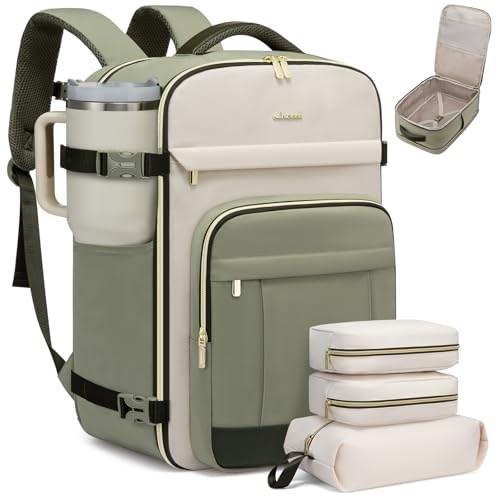
Budget 40L carry-on backpack with packing cubes and a wet pocket
We did not lab-test the products on this page. We chose them from the manufacturers' specifications, professional reviews, and patterns in owner reviews.
Carrying Comfort
How the backpack distributes weight and feels over time
Organization
Access to contents and compartment logic
Durability
Build quality and long-term reliability
Travel-Friendliness
TSA compliance, airline size limits, and packability
Value
Quality relative to price point
Volume is the first decision and the one most people overthink. The sweet spot for carry-on travel is 35-45L — large enough to hold a week of clothes with packing cubes, a laptop, and toiletries, while still fitting in overhead bins on most airlines. Here's how sizes break down in practice:
This is the feature that separates travel backpacks from hiking packs. A clamshell opening (sometimes called panel-loading) lets the bag open flat like a suitcase, so you can see and access everything without digging. The Cotopaxi Allpa 35L has one of the best clamshell designs on our list — it opens a full 180 degrees.
Top-loading designs force you to stack items vertically, which means pulling everything out to reach what's at the bottom. Fine for hiking, frustrating in a hostel at 6 AM. If your backpack is your only luggage, insist on a clamshell or at least a U-shaped front panel opening.
A good hip belt moves most of the pack's weight from your shoulders to your hips. This matters less for a quick airport transfer and enormously for a 2-kilometer walk from the train station to your Airbnb in Rome. The Osprey Farpoint 40 has the best suspension system on our list — adapted from their hiking line — while budget options like the Matein skip the hip belt entirely.
Look for padded, adjustable shoulder straps with a sternum strap. Load lifter straps (the small straps at the top of the shoulder harness) are a bonus that helps pull the pack's weight closer to your body. If you're between 5'2" and 5'8", check whether the backpack comes in a women's/small torso version — fit matters more than brand. For more packing advice tailored to independent travel, see our gifts for solo female travelers guide.
Most quality travel backpacks use nylon (measured in denier — higher = more durable). The Osprey Farpoint uses 450D recycled nylon with a DWR coating for light rain resistance. The WANDRD PRVKE uses a tarpaulin-style weatherproof shell. The Matein uses basic polyester, which is lighter but less abrasion-resistant. Many brands now offer recycled and animal-free materials — if sustainable and cruelty-free gear is a priority, see our sustainable and vegan travel gifts guide.
Zippers are the most common failure point. Look for YKK zippers on any backpack over $100 — they're the industry standard for a reason. Lockable zipper pulls are essential for hostel stays and checked bags.
Most airlines allow carry-on bags up to 56 x 36 x 23 cm (22 x 14 x 9 inches). The trick with backpacks is that they're flexible — even a 40L pack can compress down to fit stricter limits if it's not overpacked. Budget airlines like Spirit, Frontier, and Ryanair have smaller limits for overhead bags, so check before you fly. Our top picks are all sized for standard carry-on limits, but an overstuffed pack can still fail a strict airline sizer.
For most travelers, a 35-45L backpack is the sweet spot. This size fits within carry-on limits for nearly every airline, holds enough clothing for 1-2 weeks with packing cubes, and remains comfortable to carry through airports and city streets. Minimalists can get by with 25-30L, while extended-trip travelers may want 45-55L (though this often requires checking the bag).
Yes — a 40L backpack fits within carry-on limits on most major airlines, including Delta, United, American, Southwest, and Ryanair. The Osprey Farpoint 40 specifically measures 55 x 35 x 23 cm, which meets IATA carry-on recommendations. Budget airlines like Spirit or Frontier have smaller limits, so check before you fly. The key factor is dimensions, not volume — a structured 40L pack may fit while a floppy overstuffed one won't.
Travel backpacks open like a suitcase (clamshell or panel-loading) so you can access everything without unpacking. They prioritize organization with laptop sleeves, internal pockets, and lockable zippers. Hiking backpacks use a top-loading design optimized for trail access, with external attachment points and hydration compatibility. Some packs like the Osprey Farpoint bridge both worlds with a travel-focused design built on hiking suspension technology.
Backpacks win for cobblestone streets, public transit, stairs, and multi-stop trips where you're moving between locations frequently. Rolling luggage wins for business travel, resort trips, and any situation where you're mostly on smooth surfaces. If you're doing a mix of both, a hybrid backpack with a clamshell opening (like the Cotopaxi Allpa 35L) gives you suitcase-style packing with backpack mobility.
For frequent travelers, yes. A $150-250 backpack from Osprey, Cotopaxi, or Peak Design typically lasts 5-10 years and comes with a lifetime warranty. Spread over that lifespan, the cost per year of use is low. The Matein is genuinely good for occasional trips, but the zippers, padding, and strap comfort degrade faster with heavy use. If you travel more than 4-5 times per year, the mid-range investment pays for itself in durability and comfort.
The three non-negotiable features are: a clamshell or panel-loading opening (so you can pack like a suitcase), a padded hip belt (which moves most of the weight off your shoulders), and lockable zipper pulls (for security in hostels and transit). After those, prioritize a dedicated laptop compartment, compression straps, and an external water bottle pocket. Features like USB charging ports and hidden pockets are nice but rarely make or break the experience.
Use packing cubes — they're the single biggest upgrade for backpack travelers. Place heavy items (shoes, toiletries) closest to your back and at the bottom. Roll soft clothing to save space. Keep items you need during transit (passport, headphones, snacks) in external or top pockets. A 35-40L pack with packing cubes can hold 5-7 days of clothing, a laptop, toiletries, and a light jacket. See our best packing cubes guide for specific recommendations.
It remains our top overall pick. The 2024 redesign improved the laptop compartment and added more internal organization while keeping the excellent suspension system. Competitors like the Cotopaxi Allpa 35L offer better sustainability credentials and the Peak Design Travel Backpack 45L has superior camera access, but nothing matches the Farpoint's balance of comfort, durability, organization, and price. The lifetime warranty seals the deal.
Can't find what you're looking for? Explore more options directly on Amazon.
As an Amazon Associate we earn from qualifying purchases

Founder & Editor-in-Chief
Taro spent a decade in the music industry as a tour manager, crisscrossing the globe with artists and crews who demanded gear that actually worked. From overnight buses in the American Midwest to bullet trains in Japan, backstage in London to festival grounds across Europe—he's lived out of bags, cases, and carry-ons for years. That experience taught him what separates travel gear that survives the road from stuff that falls apart after one trip. Now he channels that hard-won knowledge into TravelGiftList, helping travelers find products that meet real-world demands.
Credentials