1
1
Best overall compression socks for long flights
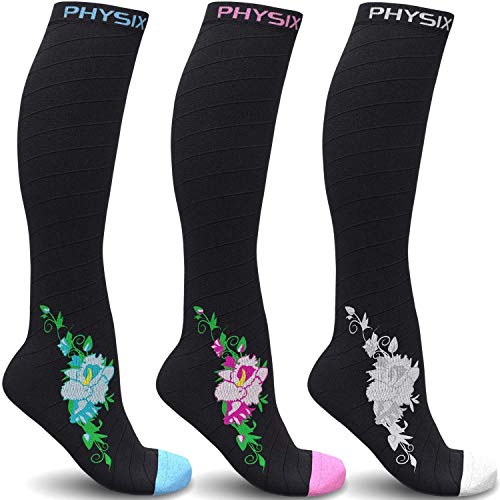
Physix Gear Compression Socks (20-30mmHg)
Prime
The Good
- Medical-grade 20-30mmHg
- Moisture-wicking
- Double-stitched heel
The Bad
- Can be tight to put on
Free returns•Fast shipping
Long flights can cause leg swelling, discomfort, and even dangerous blood clots. The right compression socks improve circulation, reduce DVT risk, and keep your legs feeling fresh from takeoff to landing. Here are the best options for air travel in 2026.
The best compression socks for flying are the Physix Gear Sport 20-30mmHg for most travelers and the Sockwell Elevation merino wool for premium comfort. The WHO found that the risk of blood clots roughly doubles on journeys of four hours or more, and clinical studies show compression socks reduce leg swelling. For long-haul flights, choose 20-30mmHg medical-grade compression. For flights under 6 hours, 15-20mmHg is sufficient.
When you sit in an airplane seat for hours at a time, gravity works against your circulatory system. Blood naturally pools in the veins of your lower legs because your calf muscles, which normally act as pumps when you walk, are largely inactive. The reduced cabin pressure at cruising altitude compounds this problem by causing the veins in your legs to expand, making it even harder for blood to flow back toward your heart. The result is swollen ankles, heavy legs, and in serious cases, the formation of blood clots.
Deep vein thrombosis, commonly called DVT, occurs when a blood clot forms in one of the deep veins of the leg. While relatively rare in the general population, the risk increases significantly on flights lasting more than four hours. A DVT clot can break free and travel to the lungs, causing a pulmonary embolism, which is a potentially life-threatening emergency. The World Health Organization's WRIGHT Project, a large-scale study on air travel and venous thromboembolism, found that the risk of DVT roughly doubles on long flights and increases further with each additional two hours of travel time.
Compression socks work by applying graduated pressure to your lower legs. The compression is strongest at the ankle and gradually decreases toward the knee, which creates a pressure gradient that helps push blood upward against gravity. This mimics the pumping action your calf muscles would provide if you were walking. Clinical trials published in journals including The Lancet and the British Journal of Haematology have demonstrated that wearing compression socks during flights reduces leg swelling by as much as 50 percent and significantly lowers the incidence of DVT in long-haul travelers.
Beyond DVT prevention, compression socks deliver noticeable comfort benefits that any traveler can appreciate. They reduce the heavy, tired feeling in your legs after a long flight, minimize ankle swelling that makes your shoes feel tight after landing, and help you arrive at your destination feeling more energized. Many frequent flyers report that compression socks are the single most impactful piece of travel gear they own, making a bigger difference to how they feel after flying than any pillow or blanket.
The best compression socks for long haul flights have graduated compression, a moisture-wicking fabric such as merino wool or a nylon blend, and a fit comfortable enough to wear for the whole flight. Of the six we compared, our top pick is the Physix Gear (20-30 mmHg, sold as a 3-pack). For merino wool, the Sockwell Elevation (15-20 mmHg) is the step up, and CEP makes a merino pair as well.
While compression socks benefit virtually anyone on a long flight, certain groups face elevated risk and should consider them essential rather than optional. Here are the key risk factors that make compression socks particularly important:
The best compression socks for most flyers, based on compression quality, comfort, durability, and value.

Detailed analysis of every pair we evaluated, explaining who each sock is best suited for and what sets it apart.
The Physix Gear socks earn our top pick because they deliver genuine medical-grade 20-30mmHg compression at a price point that undercuts many competitors charging twice as much. The double-stitched heel and reinforced toe give these socks a durability edge that matters for frequent travelers who will wash and rewear them dozens of times. The moisture-wicking fabric keeps your feet dry even on ultra-long-haul flights where you might wear them for 15 hours straight. These are the compression socks we recommend for most travelers, particularly anyone flying routes over six hours who wants real circulatory support without spending premium prices.
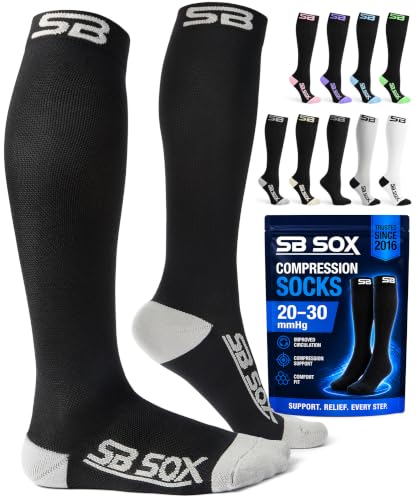
The SB SOX offer the same 20-30mmHg medical-grade compression as our top pick at an even lower price, making them an excellent entry point for travelers who want to try compression socks without a significant investment. The anti-odor fabric is a genuine differentiator for multi-day trips where you might not have immediate access to laundry. The reinforced toe and heel provide decent durability, though they do not hold up quite as well as the Physix Gear over many wash cycles. If you are a once-or-twice-a-year traveler looking for effective, affordable compression, these are the socks to buy.
Sockwell occupies the premium tier of travel compression socks, and for good reason. The merino wool blend is naturally temperature regulating, keeping your feet warm in cold cabin conditions without overheating. Merino wool also has natural antimicrobial properties that reduce odor far better than any synthetic treatment, making these socks ideal for travelers who want one pair they can wear on back-to-back travel days. Made in the USA with a 15-20mmHg compression level, the Sockwell socks are best suited for travelers who prioritize material quality and comfort and are flying routes under eight hours where the lighter compression is sufficient.
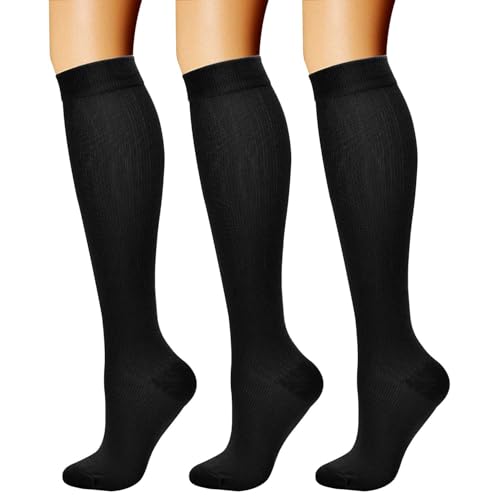
The CHARMKING 3-pack is a popular choice, and the appeal is obvious: three pairs in one pack for less than most single premium pairs. The 15-20mmHg graduated compression is lighter than medical-grade but still meaningfully reduces swelling and fatigue on flights. The fun patterns and color options make these socks something you might actually want to wear outside the airport. They are the best option for budget-conscious travelers, families buying multiple pairs, or anyone who wants to try compression socks without spending much per pair.
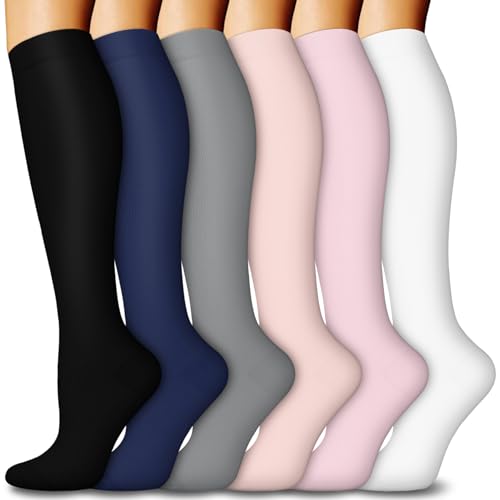
The FuelMeFoot 6-pack is purpose-built for the frequent flyer who wants a fresh pair for most days of the week. With six pairs in one pack, the per-pair cost is hard to beat. The 15-20mmHg compression level is comfortable enough for all-day wear, and the multiple color options mean you can match them to different outfits. The trade-off is thinner material that will not last as long as a single premium pair, but that is by design. These socks are meant to be used heavily and replaced when they wear out, making them ideal for road warriors, digital nomads, and anyone logging significant flight hours each month.
CEP is the gold standard in professional compression wear, used by elite athletes and medical professionals worldwide. These German-engineered socks feature independently verified compression levels, meaning the 20mmHg on the label is exactly what you get, not an approximation. The anatomical left and right foot design provides a fit that no one-size-fits-both-feet sock can match. They are by far the most expensive option on this list, but for travelers with existing circulation issues, those who fly ultra-long-haul routes regularly, or anyone who demands the absolute best compression technology, the CEP socks are worth the investment.
| Product | Compression | Material | Pairs | Best For | Price |
|---|---|---|---|---|---|
| Physix Gear | 20-30 mmHg | Synthetic blend | 1 pair | Best overall | $30.65Amazon price as of Oct 27, 2026, 10:31 AM UTC. Details |
| SB SOX | 20-30 mmHg | Anti-odor synthetic | 1 pair | Best value medical-grade | $18.95Amazon price as of Oct 27, 2026, 10:31 AM UTC. Details |
| Sockwell | 15-20 mmHg | Merino wool blend | 1 pair | Premium comfort | $32.95Amazon price as of Oct 27, 2026, 10:31 AM UTC. Details |
| CHARMKING | 15-20 mmHg | Nylon/polyester | 3 pairs | Budget pick | $8.99Amazon price as of Oct 27, 2026, 10:31 AM UTC. Details |
| FuelMeFoot | 15-20 mmHg | Nylon/polyester | 6 pairs | Frequent flyers | |
| CEP 3.0 | 20 mmHg (verified) | Technical synthetic | 1 pair | Professional grade |
Compression is measured in millimeters of mercury (mmHg), the same unit used for blood pressure. The number refers to the amount of pressure the sock applies at the ankle, which is always the point of maximum compression. Here is what each level means and who it is for:
The fabric your compression socks are made from affects comfort, temperature regulation, odor resistance, and longevity. Here is how the main material categories compare:
Proper sizing is critical. Compression socks that are too loose will not provide therapeutic benefit, while socks that are too tight can restrict circulation and cause discomfort. Follow these steps:
For air travel, knee-high compression socks are the only correct choice. During flights, blood pools in the entire lower leg between the ankle and the knee. Knee-high socks apply graduated pressure along this full area, supporting the calf muscles in pumping blood upward. Ankle-length compression socks address only the foot and completely miss the calf region, which is where deep vein thrombosis most commonly originates. Every medical guideline for DVT prevention during air travel specifies knee-high compression hosiery. Ankle compression socks have their uses in athletics and daily comfort, but they are not effective for the specific circulatory challenges of flying.
Getting the most benefit from compression socks requires more than just pulling them on. Here is a step-by-step guide to using them effectively on your next flight:
Compression socks are safe for the vast majority of healthy adults, but there are situations where you should consult a medical professional before wearing them:
If you have a history of DVT or blood clotting disorders, your doctor may recommend a specific compression level or prescription-grade socks rather than over-the-counter options. Always follow your physician's guidance over general recommendations.
Important: This article provides general health information about compression socks for travel and is not a substitute for professional medical advice. If you have concerns about your circulation or DVT risk, consult your doctor before your next flight.
Yes. Multiple clinical studies have demonstrated that graduated compression socks significantly reduce leg swelling and lower the risk of deep vein thrombosis (DVT) during air travel. The World Health Organization found that the risk of blood clots roughly doubles after travel of four hours or more, and lists graduated compression stockings among the measures for travelers at higher risk. By applying graduated pressure that is strongest at the ankle and decreasing toward the knee, these socks help your calf muscles push blood back toward the heart despite the reduced cabin pressure and prolonged immobility of flying.
For most healthy travelers, 15-20 mmHg provides comfortable, light compression that reduces swelling and fatigue on flights under six hours. For long-haul flights over six hours, medical-grade 20-30 mmHg is recommended because it delivers stronger circulation support during extended immobility. Compression levels of 30-40 mmHg are prescription strength and should only be used under medical advice. If you are unsure, start with 15-20 mmHg and move up if you still experience significant swelling.
Put your compression socks on in the morning before you head to the airport, ideally before your legs have any swelling. Applying them after your legs are already swollen makes them harder to pull on and less effective. Keep them on throughout the flight and for a few hours after landing while your circulation normalizes. If you are taking a red-eye and want to sleep, it is fine to wear them overnight on the plane.
Compression socks are safe for the vast majority of healthy adults. However, people with peripheral artery disease, severe peripheral neuropathy, skin infections, or dermatitis should consult a doctor before wearing them. Socks that are too tight or the wrong size can cause discomfort, skin irritation, or restrict blood flow. Always follow the manufacturer's sizing chart and discontinue use if you experience numbness, tingling, or increased pain.
Measure your calf circumference at its widest point, typically about halfway between your knee and ankle. Also measure your ankle circumference just above the ankle bone. Compare these measurements to the brand's specific size chart, as sizing varies between manufacturers. If you fall between two sizes, size up for 20-30 mmHg socks and size down for 15-20 mmHg socks. Taking measurements in the morning before any swelling occurs gives you the most accurate fit.
Knee-high compression socks are significantly more effective for air travel. During flights, blood pools primarily in the lower legs between the ankle and the knee. Knee-high socks apply graduated pressure along this entire area, helping the calf muscles pump blood upward. Ankle-length compression socks only address circulation at the foot and miss the critical calf region where DVT most commonly develops. Every medical guideline for flight-related DVT prevention specifies knee-high compression.
Most compression socks maintain their therapeutic pressure for about six months of regular use, or roughly 30 to 40 washes. Over time the elastic fibers break down and the socks lose compression, even if they still look fine. Signs it is time to replace them include the socks feeling noticeably looser, sliding down during wear, or showing visible thinning in the fabric. If you fly frequently, consider rotating between two or three pairs to extend the lifespan of each.
Check out our travel pillows, noise-canceling headphones, and other comfort essentials.
View Travel Pillows
Founder & Editor-in-Chief
Taro spent a decade in the music industry as a tour manager, crisscrossing the globe with artists and crews who demanded gear that actually worked. From overnight buses in the American Midwest to bullet trains in Japan, backstage in London to festival grounds across Europe—he's lived out of bags, cases, and carry-ons for years. That experience taught him what separates travel gear that survives the road from stuff that falls apart after one trip. Now he channels that hard-won knowledge into TravelGiftList, helping travelers find products that meet real-world demands.
Credentials